How AI is Transforming Steel Mill Waste Management
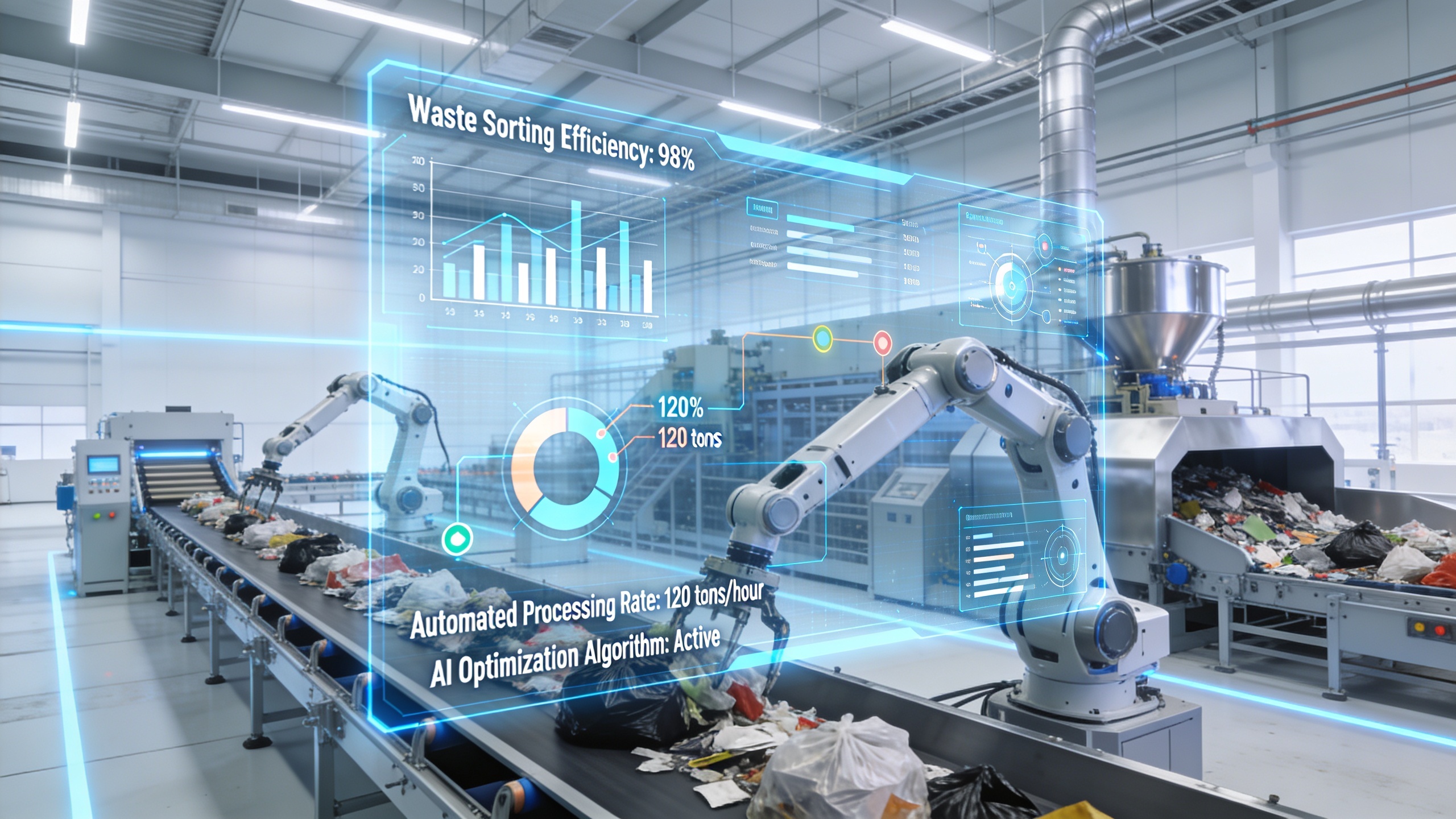
News is buzzing about South Korea’s major steelmaker, Gwangyang Steelworks, which has introduced an AI system called “Waste GPT.” To streamline waste processing within the mill, they built an integrated guidance system based on artificial intelligence. At first glance, you might think, “Oh, just another big company story,” but this case is packed with valuable insights that apply to AI adoption in small and medium-sized enterprises (SMEs) as well.
I myself have experience using AI to analyze and reconstruct all emails, regulations, and laws during legal negotiations in Malaysia. What I realized then was that AI truly shines not in “specialized tasks” but in “everyday, tedious work.” The Gwangyang Steelworks case is a perfect example of deploying AI in a humble, expertise-dependent area like waste management.
Why Waste Management Needs AI
Waste management in factories and business sites is a complex web of laws, regulations, and internal rules. Decisions like “Is this scrap industrial or general waste?” or “Which disposal company should we contact?” are often held as tacit knowledge by experienced veteran employees. This creates a dependency on specific individuals, posing risks of workflow disruptions when those employees transfer or retire.
The “Waste GPT” system introduced by Gwangyang Steelworks trains AI on this specialized knowledge, allowing anyone to easily access the correct disposal methods. In a large-scale environment like a steel mill, the variety of waste types is enormous. An AI-powered integrated guidance system is an ideal solution.
Points Applicable to SMEs
However, this isn’t just for large corporations. In SME factories and offices, waste sorting rules and disposal procedures also tend to become dependent on specific individuals. For example, it’s not uncommon in a small manufacturing plant to hear, “How do we dispose of this waste oil?” and have to ask a veteran employee every time.
By building an internal knowledge base using generative AI for such tasks, you can expect similar results to Gwangyang Steelworks. Specifically, you can create a chatbot using ChatGPT or Claude that learns from your company’s waste management manuals and relevant regulations. Starting at just a few thousand yen per month, the barrier to entry is extremely low.
Sequential Design is Key to Success
Alongside this news, another topic worth noting is the free release of materials on “sequential design” to support generative AI adoption in SMEs. These materials emphasize that successful AI implementation requires not blindly introducing tools, but rather organizing business processes and designing the order in which AI is applied.
From my experience supporting IT adoption for over 38 clients, the biggest reason for AI failure is “unclear objectives.” The mindset of “let’s just try AI” almost always results in unused tools being left to gather dust.
In Gwangyang Steelworks’ case, there was a “clear problem” (waste management), and a specific system (“Waste GPT”) was introduced to solve it. If this “problem → solution” order is reversed, AI adoption is doomed to fail.
Specific Implementation Steps
So, what steps should SMEs take to successfully adopt AI? Based on my experience, I recommend the following:
First, take inventory of your business processes. Identify which tasks take how much time and which tasks can only be done by specific people. Second, pinpoint problems that AI can solve. Priority candidates are knowledge-based tasks that rely on specific individuals or rule-based decisions. Third, create a prototype with minimal cost and verify its effectiveness. There’s no need to jump into a large-scale system right away.
By following these steps, you can expect sufficient results even without a large-scale AI implementation like Gwangyang Steelworks. In fact, one of my clients achieved a reduction of over 20 hours of work per month simply by replacing internal inquiry responses with an AI chatbot.
Cost and Implementation Barriers
Many business owners worry that AI adoption will cost millions of yen. However, today’s generative AI tools are surprisingly affordable. ChatGPT’s business plan starts at around 2,000 yen per month, and Claude is in a similar price range. Even if you create a customized chatbot for your company, an initial investment of tens of thousands to a few hundred thousand yen is usually sufficient.
Of course, a full-fledged system like Gwangyang Steelworks’ “Waste GPT” would require a more substantial investment. But for most SME workplaces, what’s needed isn’t such a large-scale system; a “small AI” that answers everyday questions is often enough.
I myself use AI to streamline my own business operations, generating approximately 7.53 million yen worth of value annually at a monthly cost of about 21,000 yen. That’s an ROI of roughly 2,989%. AI adoption doesn’t have to be a “big investment”; it can start with a “small seed planting.”
Applicability to Construction Company Operations
This news also seems to be tied to events focusing on AI use in construction company operations. SMEs like construction companies are precisely the fields where AI adoption offers significant benefits. For example, tasks like creating estimates, managing customers, and checking regulations are often dependent on specific individuals.
The Gwangyang Steelworks case provides a “template” applicable to AI adoption in such SMEs: the approach of “training AI on specific task knowledge to create a knowledge base anyone can use.” This is a method that can be practiced by any company, regardless of industry.
Conclusion: AI Adoption Starts with a Small Step, Not a Giant Leap
The news of Gwangyang Steelworks’ “Waste GPT” might seem like a story from a distant world. But its essence—”sharing specialized knowledge through AI to reduce dependency on individuals”—is a hint for solving a common problem faced by all companies.
What’s needed for AI adoption isn’t a huge budget or specialized expertise. It’s calmly examining your own business processes and thinking, “Which tasks can we entrust to AI?” And then, starting with a small step. In my experience, companies that take that first step see their AI usage accelerate rapidly afterward.
If you’re thinking, “AI for something as mundane as waste management?”, I encourage you to take a fresh look at your own company’s “mundane but important tasks.” That’s where the biggest opportunity for AI adoption lies.


Comments