The Impact of “Task-Specific AI” Being Fully Adopted by Municipalities
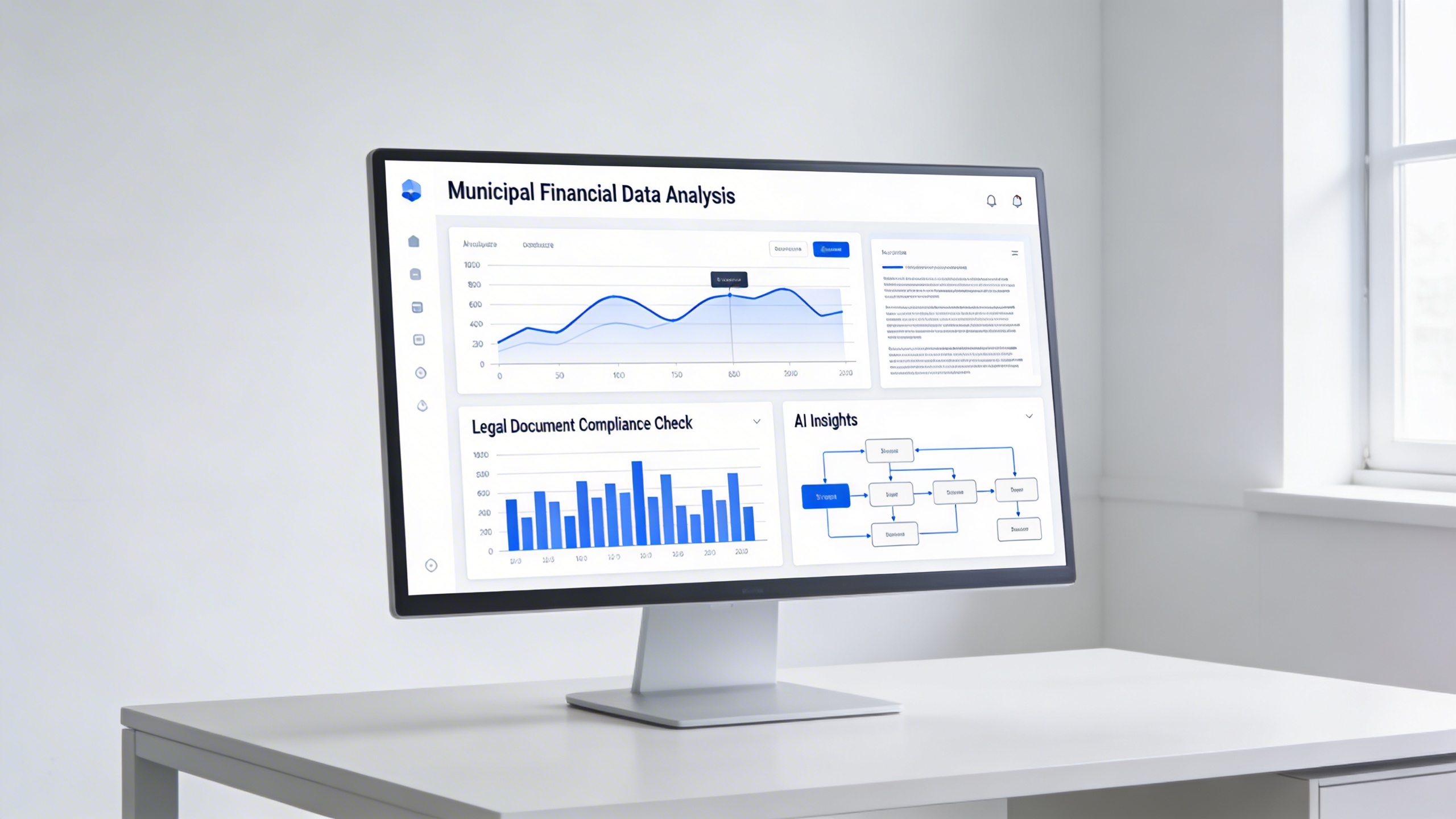
The city of Fukuyama in Hiroshima Prefecture announced to its city council a policy to fully implement AI utilization starting in fiscal year 2026. Concurrently, WiseVine Inc. began offering a free trial of a generative AI specialized for municipal financial operations. These moves are clear signs that AI adoption is shifting from the “experimental phase with general-purpose tools” to the “full-scale implementation phase for specific tasks.”
Executives and CTOs have likely become somewhat accustomed to the potential of general-purpose AIs like ChatGPT and Claude. However, this news indicates AI’s penetration into highly specialized domains where those tools alone are insufficient. Municipal tasks like “funding consideration,” “special local allocation tax determination,” and “assessment work” involve complex laws and unique systems, making them even more reliant on individual expertise than in private companies.
This trend hints at the next stage of AI adoption across all industries. It marks a shift from asking “What can general AI do?” to “How do we build and implement AI specialized for our core operations?”
Why General AI Can’t Automate Municipal Operations
A deeper look at Fukuyama City’s case and WiseVine’s services reveals the limitations of general AI and the requirements for task-specific AI.
The Barrier of Specialized Knowledge and Contextual Understanding
Municipal financial operations are a complex web of laws, including the Local Autonomy Act, the Local Allocation Tax Law, various subsidy systems, past legal precedents, and practices unique to each municipality. While general AI may possess fragments of this knowledge, it lacks the overwhelming amount of contextual information needed for specific judgments, such as “which funding source to allocate to this project, which tax application to file, and what risks to assess” for a particular municipality.
Consider your own company’s operations. For instance, if you were to automate your “contract review” process, simply pasting clauses into Claude would be inadequate. Judgments are influenced by “context” that an external AI cannot know—your company’s past dispute cases, power dynamics with clients, industry practices, and trends in court rulings. Municipal work is an area with an extremely high degree of this “context dependency.”
Automating the “Interpretation” and “Application” of Systems
The “special local allocation tax determination” that WiseVine’s AI reportedly assists with is not mere information retrieval. It’s a task that supports the “application” and interpretation of national systems to the specific, individual project plans of a municipality. Achieving this requires training the AI on the vast “interpretive know-how” that exists between legal text (input) and concrete judgment (output).
This is akin to management decision-making itself. Between sales data (input) and next fiscal year’s budget proposal (output) lies an interpretive process involving market trends, competitive landscape, and company strengths/weaknesses. A general AI cannot recreate this process from scratch; a “specialized AI” trained on your company’s past decision data is needed.
Three Approaches to Building “Task-Specific AI” and Associated Costs
So, how can you acquire “task-specific AI” to automate your core operations? There are three main approaches, each with different costs and difficulty levels.
Approach 1: Adopting a Dedicated SaaS (The WiseVine Model)
The easiest method is to adopt a SaaS specialized for your industry or task, like WiseVine. The benefits are speed of implementation and the vendor’s concentration of expert knowledge into the product. Municipalities like Fukuyama City can pursue efficiency through this approach even without the resources to develop AI in-house.
Estimated Cost Range: Tens to hundreds of thousands of JPY per month (depending on company size and scope of use). Many cases start with a free trial. Initial implementation costs are relatively low, but there’s a risk of not knowing if it’s a perfect fit for your operations until you try it.
Approach 2: Customizing General AI (RAG & Fine-Tuning)
The second method is customizing foundational models like Claude or ChatGPT Enterprise with your company’s data. Specifically, you give the AI expertise by having it learn from your company’s manuals, past work records, contracts, and decision case data (using RAG: Retrieval Augmented Generation).
The author of this media platform also uses this method for legal work. When expanding business into Malaysia, we loaded all local laws, regulations, and past negotiation emails into Claude to assist with legal risk analysis and drafting response documents. This is a prime example of building a “legal task-specific AI” on the spot.
Estimated Cost Range: Technical personnel costs (hundreds of thousands to millions of JPY for initial setup) + AI API usage fees (tens of thousands of JPY per month). Requires in-house technical resources but offers the potential to build the most tailored solution for your operations.
Approach 3: In-House Development (Utilizing Code-Generating AI)
The third method is using code-generating AIs like Claude Code or GitHub Copilot to develop a specialized AI tool from scratch. While the development barrier has lowered, a certain level of engineering resources is still required. The greatest appeal is the ability to break free from SaaS dependency and fully internalize business processes that are sources of competitive advantage.
Estimated Cost Range: Primarily engineer personnel costs. For small-scale tool development, expect a workload of several weeks to months. Long-term maintenance costs must also be considered.
The Next Step for Executives: Find Your Company’s “WiseVine”
Fukuyama City’s move is a mirror for all companies. Your company surely also has complex, expertise-dependent “core operations” that external general AI cannot adequately handle.
Start by identifying those operations. They might be strategic judgments known only to management, customer service handled only by veteran employees, or quality control tasks involving multiple regulations.
Next, select the optimal approach to automate that task, considering cost and speed.
- If you prioritize immediate effect, choose Approach 1 (Dedicated SaaS): Research the market to see if there are specialized SaaS solutions close to your operations. In many fields, startups like WiseVine are beginning to emerge.
- If you prioritize uniqueness and fit, choose Approach 2 (Customization): Organize your company’s data and have a team with tech resources (or an external partner) evaluate the customization potential of general AI.
- If you want to internalize it as a source of competitive advantage, choose Approach 3 (In-House Development): If that business process itself is your company’s strength, consider internalization even if it requires development resources. Code-generating AI has made this far more cost-effective than just a few years ago.
Don’t Forget the “Limits of AI” and the Human Role
Finally, a crucial lesson from the municipal case is that AI “assists” with “determination” and “assessment.” The final judgment and responsibility always lie with humans. This is the same principle as with medical diagnostic support AI or financial credit assessment AI.
Task-specific AI is a tool that dramatically enhances the “reproducibility of judgment” and “processing speed” of veteran staff and skilled employees. It should not be seen as replacing them, but as a “force multiplier” that embeds their expertise into the organization, allowing them to focus resources on more advanced judgments.
As the discussion on AI utilization progresses from “efficiency” to “differentiation,” the strategic adoption of “task-specific AI” that fuses your company’s deep expertise with AI’s processing power will likely bring the next clear competitive advantage. Fukuyama City’s step is a surefooted stride within that major trend.


Comments