
- The Generative AI Trend is Shifting
- The Rise of Domain-Specific AI: A Look at “EdGPT”
- The Practical Application of AI Agent Platforms
- Visualizing the Value of “Being Cited” and Branding in the AI Era
- The Next Step for Practical Implementation: Three Concrete Actions
- Management Decisions to Overcome Cost and Risk
The Generative AI Trend is Shifting
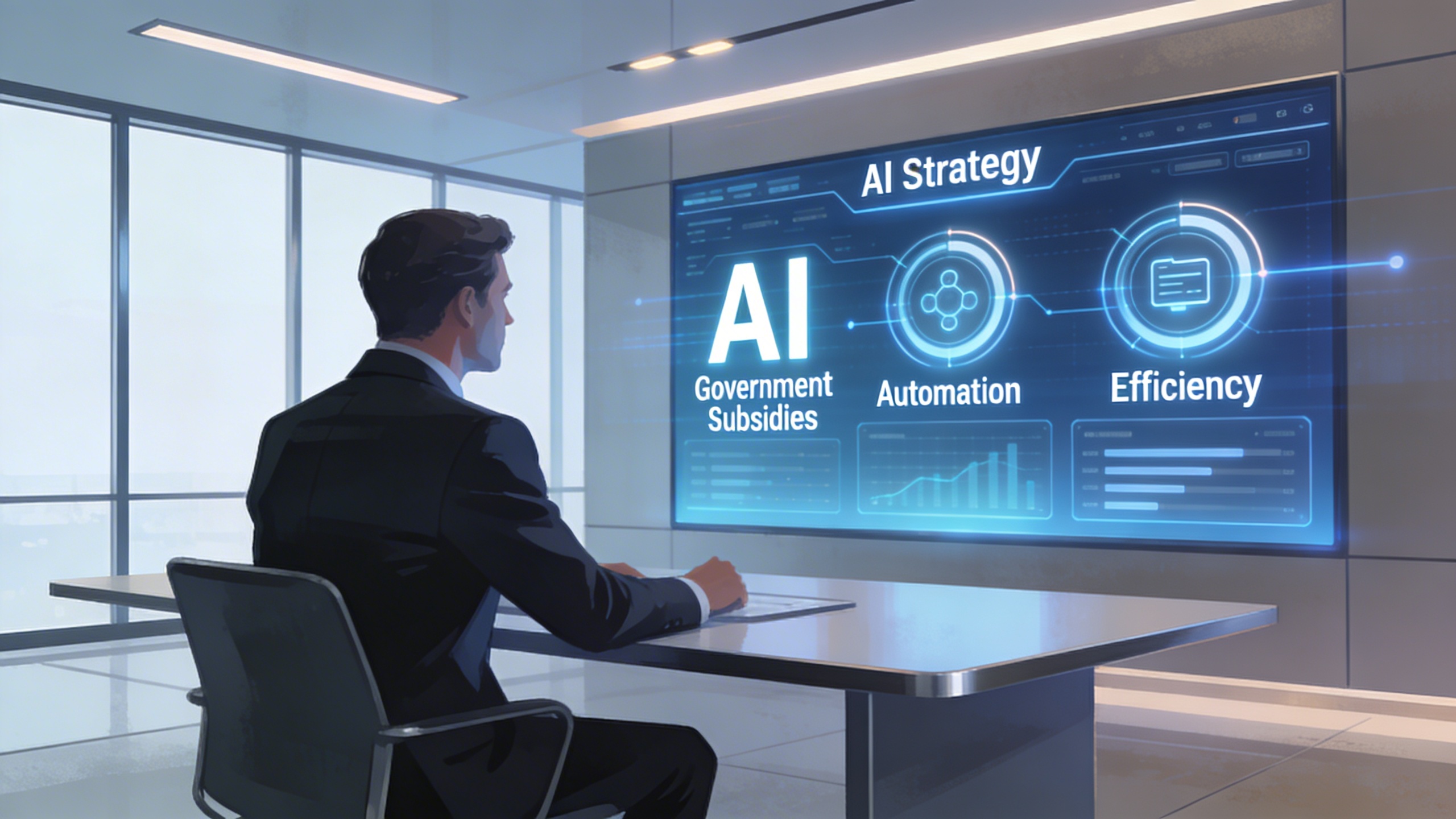
The business application of generative AI is entering a new phase. Professor Masahiro Kotozaka of Keio University highlighted a critical turning point in DIAMOND Harvard Business Review, titled “Generative AI: From Efficiency to Differentiation.” Many companies have so far introduced generative AI, such as ChatGPT, as a tool for “operational efficiency” in tasks like document creation and information organization. However, to build a competitive advantage, transitioning to this next stage is essential. This article uses the latest news to explain the concrete path for executives and CTOs to leverage generative AI for “differentiation.”
The Rise of Domain-Specific AI: A Look at “EdGPT”
First, the evolution from general-purpose tools to “domain-specific” ones deserves attention. A seminar reported by PR TIMES, titled “The Evolution from ChatGPT to Educational ‘EdGPT’,” is a symbolic move in this direction. It focuses on AI applications specialized for the specific domain of education (EdGPT). This is not merely about using ChatGPT in educational settings. It represents a movement to build optimized AI models or agents that deeply understand the knowledge, pedagogy, and learner characteristics of the education domain.
This trend is not limited to education. Building AI specialized for your own business domain—your “Corporate GPT”—will become the next major differentiator. For example, an AI assistant trained on your company’s long-accumulated customer data, product knowledge, knowledge base, and internal regulations can demonstrate extremely high accuracy and contextual understanding unattainable with generic ChatGPT. This creates a foundation for generating value that competitors cannot easily replicate, such as improving customer service quality, automating complex internal processes, and generating ideas for new business ventures.
The Practical Application of AI Agent Platforms
The news that Allganize will exhibit at “AI World 2026” indicates that the technological foundation for making this “domain specialization” a reality is being established. Generative AI and AI agent platforms enable companies to build systems where multiple AI agents collaborate and operate autonomously, tailored to their specific business processes.
For instance, as discussed in a seminar on mid-career recruitment efficiency, such a system could involve multiple AI assistants working together to handle initial resume screening, interview scheduling, and follow-ups with candidates. The key is not using a single AI tool but orchestrating multiple “specialist agents” on a “platform.” This expands the potential to apply AI to complex tasks with intricate decision criteria that were previously difficult to automate (e.g., screening applications for mid-career hires).
From a management perspective, this platform-based approach, while requiring initial investment, ensures long-term scalability and flexibility. Once the foundation is built, it can be extended to various departments such as sales, customer support, and accounting.
Visualizing the Value of “Being Cited” and Branding in the AI Era
The launch of the beta version of ITreview’s “AEO Dashboard,” reported by The Asahi Shimbun, highlights a new metric for marketing and branding in the AI era. This service visualizes “to what extent” a company’s web content is “cited” by generative AI (e.g., in ChatGPT’s responses).
This is an extremely important perspective. In a future where generative AI becomes a primary gateway for information gathering, “being cited as a trusted source by AI (AEO: AI Engine Optimization)” will be as crucial as, or even more crucial than, ranking high on search engines (SEO) for brand awareness and customer acquisition. If AI accurately cites and conveys your company’s product information, technical explanations, or industry analysis to users, it represents immeasurable brand value.
Executives need to reconstruct their company’s knowledge management and content strategy from the perspective of “citatability by AI.” Systematically disseminating highly specialized, reliable information in a format that is easy for AI to learn will likely become the next-generation differentiation strategy.
The Next Step for Practical Implementation: Three Concrete Actions
So, how should executives and CTOs steer their course into this “from efficiency to differentiation” phase? Here are three concrete actions that can be started tomorrow.
1. Launch an “AI-Learnable” Project for Internal Knowledge
First, accelerate the digitization and structuring of your company’s most valuable, yet scattered, internal knowledge (e.g., sales manuals, technical Q&A, past best practices, contract templates). Prepare this as searchable internal systems or as training data for future company-specific AI models. Aim to move beyond having PDFs scattered in cloud storage to an advanced “AI-ready” state.
2. Experiment with “AI Agent Collaboration” in a Pilot Area
Utilize platforms like Allganize, Microsoft Copilot Studio, or integration features of various RPA tools with AI to trial AI agent collaboration in a small, controlled area. For example, experiment in customer support by linking agents that receive inquiries, search the knowledge base, generate responses, and prompt human review. Identify success patterns and accumulate know-how within the company.
3. Incorporate an “AEO” Perspective into Content Strategy
Collaborate with the marketing department to review whether the content you publish is in a format easily citable by AI. Strive for clear headings (h-tags), structured data, accurate fact-based descriptions, and clear presentation of expertise. Begin setting up a system to quantitatively monitor your domain’s “AI citation performance” using tools like ITreview’s dashboard.
Management Decisions to Overcome Cost and Risk
Implementing differentiation-focused AI naturally involves higher costs and risks than using generic tools. Building or customizing proprietary models and introducing/integrating platforms require technical capability and investment. Furthermore, risk management concerning AI judgment errors and handling confidential information becomes even more critical.
However, failing to invest here likely carries a greater risk: falling behind competitors who leverage their core knowledge for differentiation in the near future. The key is not a company-wide, sweeping reform but an approach that starts with manageable pilot projects, accumulates success stories, and demonstrates return on investment. The path to “differentiation” highlighted by Professor Kotozaka is not achieved overnight but opened through the accumulation of knowledge and repeated technological experimentation.
Generative AI is no longer just a topic to “try out.” The crucial responsibility for today’s leaders is determining “how to position it at the core of strategy and change the competitive rules in their favor.” Having reaped the fruits of efficiency, now is precisely the time to consider serious investment in differentiation.

Comments