
The Era of Differentiation by “Usage,” Not Company Size
A survey by KeyMan’s Net has sparked debate among business leaders. The article, “AI Usage That Can’t Be Explained by Company Size Alone: The ‘Advanced Group’ Among SMEs,” reveals that AI adoption success depends not on capital or employee count, but on leadership mindset and on-the-ground literacy.
Having supported AI adoption for over 38 clients, I can confirm this trend from experience. Large companies often get bogged down in approvals, while SME leaders who personally master tools like Claude or ChatGPT can transform operations overnight.
This article uses the survey as a springboard to outline a concrete methodology for SMEs to become AI-forward, including cost considerations and adoption hurdles.
Three Common Traits of AI-Forward SMEs
According to the survey, SMEs with high AI usage share these traits:
First, top management personally uses AI tools in daily work. I use Claude Code and ChatGPT daily for contract reviews, email drafting, and data analysis. When leaders demonstrate their own proficiency, resistance on the ground drops dramatically.
Second, they start with small wins in specific tasks. Instead of a company-wide rollout, they begin in departments with repetitive work, like accounting or customer support.
Third, they frame AI adoption as “improving work quality” rather than “cutting costs.” The goal is not just efficiency, but eliminating siloed knowledge and enhancing decision quality.
The Real Cost and ROI of AI Adoption
Let’s look at concrete costs based on my own operational experience.
Starting with ChatGPT Plus ($20/month) and Claude Pro ($20/month) costs about $40/month. For a custom business AI agent, including API fees, it’s around $150–$200/month.
In my case, for about $140/month, I generate roughly $50,000 in annual value (93 business areas, saving 1,550 hours per year). That’s an ROI of about 2,989%—a level easily replicable by SMEs.
The biggest hurdle is deciding where to start. Based on my experience, these three tasks are ideal first candidates:
・Drafting and summarizing emails (ChatGPT)
・Initial contract reviews (Claude)
・Automated responses for internal FAQs (custom AI agent)
These show results within a week and face minimal resistance.
The SME Advantage That Big Companies Can’t Match
Large companies struggle with AI adoption due to organizational complexity and lengthy approval processes. In contrast, SMEs can move quickly because leaders can give direct orders.
One manufacturing client (30 employees) I supported saw the president start using ChatGPT, and within two weeks, it was deployed company-wide. Quote preparation time dropped by 80%. That speed is nearly impossible for large firms.
Also, SMEs have less data, so AI training costs are lower. There’s no need to clean years of historical data—just feeding recent data often yields sufficient accuracy.
Three Barriers to Adoption—and How to Overcome Them
To become AI-forward, you must recognize and strategically address these barriers:
First, “security concerns.” Many leaders hesitate to input legal or accounting data into AI. The solution: enforce a rule to anonymize data before input. I mask personal names and confidential info before feeding contracts into Claude.
Second, “employee skill gaps.” Using AI effectively requires prompt design skills. But this can be solved with training and templates. In my consulting, I first distribute a set of 10 “ready-to-use prompts” and then guide employees in adapting them.
Third, “sustained operation.” AI tools aren’t a one-time setup; they need regular updates and tuning. A monthly review meeting to identify improvements creates a cycle that overcomes this barrier.
Action Plan to Become AI-Forward
Finally, here’s a plan you can start tomorrow:
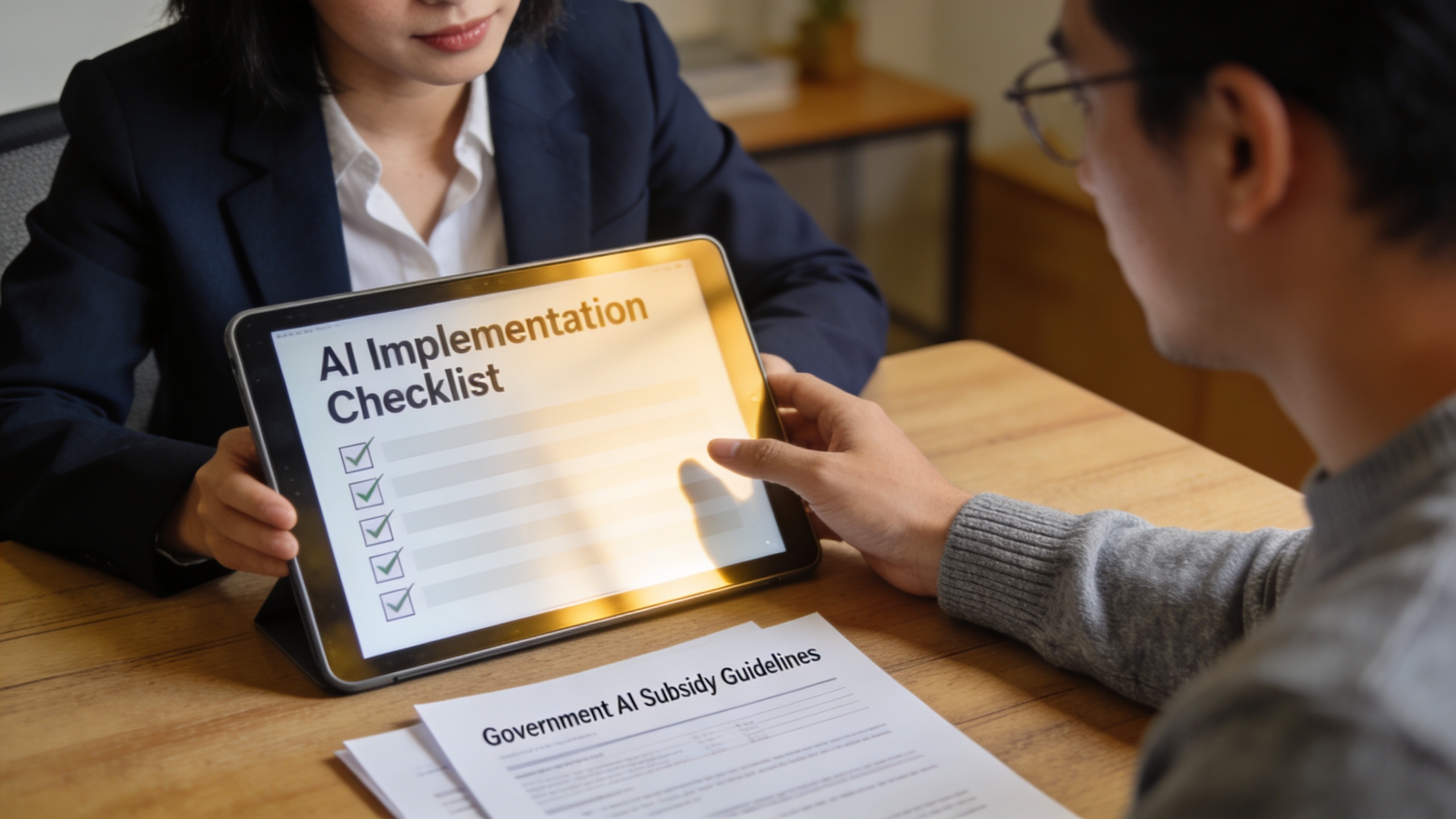
1. The CEO uses ChatGPT or Claude daily for one week (email drafting, meeting summaries, etc.)
2. Identify the department with the most repetitive tasks and introduce AI for one specific task
3. After one month, measure results and share success stories company-wide
4. Plan to roll out to the next task
Follow these four steps over three months, and your company can join the ranks of “AI-forward” leaders. What you need isn’t a big budget like a large corporation, but the leader’s attitude of “I’ll try it myself first.”
The AI race has already begun. The winner isn’t determined by company size, but by the will to act.

Comments