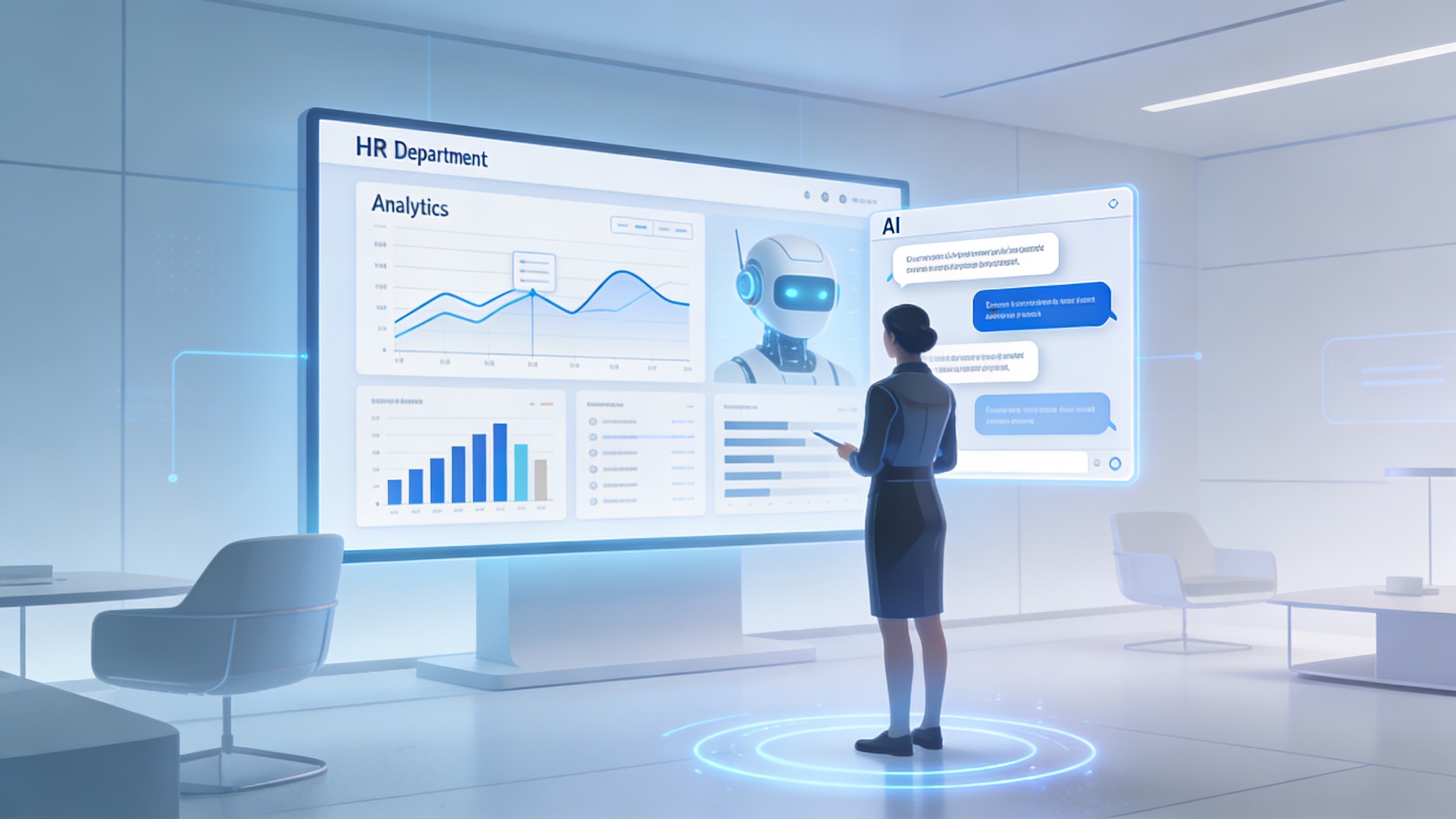
Why HR Needs a “Two-Sword Style” with AI
The use of AI in HR departments is accelerating. As noted in Diamond Online articles, adoption is progressing in two areas: generative AI and predictive AI. However, the reality is that many companies are unsure where to start.
In my consulting work, I’m seeing an increase in inquiries about implementing HR AI. Streamlining recruitment, predicting employee turnover, designing evaluation systems—you need a strategy that understands which type of AI is best suited for each task.
This article explains how to effectively use generative and predictive AI in HR, the associated costs, and practical points for executives to keep in mind.
How Generative AI is Transforming Recruitment, Evaluation, and Training
Generative AI creates text and images automatically. Tools like ChatGPT and Claude are prime examples. In HR, it offers quick wins in areas like:
Practical Examples in Recruitment
Take writing job postings. Traditionally, an HR staffer would spend hours crafting one. Now, by simply inputting “job title,” “required skills,” and “company culture” into generative AI, a draft is ready in 30 seconds.
It also streamlines answering candidate questions. By training the AI on frequently asked questions (FAQs) and deploying it as a 24/7 chatbot, you can significantly reduce the HR team’s workload.
Applications in Evaluation and Training
Designing evaluation systems is another strength of generative AI. Tell it your requirements like “fairness,” “transparency,” and “growth promotion,” and it will automatically generate a draft of evaluation criteria and forms.
Furthermore, in employee training, it can create customized content based on individual skill levels. One of my clients used AI to create compliance training materials for new hires, cutting preparation time by more than half.
The cost of implementing generative AI ranges from a few thousand to tens of thousands of yen per month. ChatGPT Plus is about $20/month, and Claude Pro is about $20/month. Even for dozens of internal users, the cost is around $700/month. The barrier to entry is extremely low.
How Predictive AI Visualizes “Invisible Risks”
Predictive AI, on the other hand, forecasts the future based on past data. In HR, it’s expected to be used in the following ways:
Turnover Prediction and Talent Management
By analyzing data like employee tenure, performance history, overtime hours, and vacation days, it can predict, for example, “This employee has a high probability of leaving within the next three months.” This allows management to take proactive measures.
One mid-sized company saw a 20% reduction in turnover after implementing predictive AI. They were able to detect early signs of resignation risk and take action through meetings or job rotations.
Preventing Hiring Mismatches
Models are also being developed to predict a candidate’s retention rate and performance at your company based on their past work history and skillset. This allows for a data-driven assessment of “cultural fit” that interviews alone might miss.
The cost of implementing predictive AI is higher than generative AI. Initial setup typically ranges from $7,000 to $21,000, with monthly maintenance fees of $700 to $3,500. However, the cost of a single hiring mistake or employee departure is estimated at 1.5 to 2 times their annual salary. The return on investment is higher for companies hiring high-value talent.
Strategic Priorities for Executives
The key is to implement generative and predictive AI in stages. Based on my experience, the following order is most effective:
Phase 1: Use Generative AI for “Visualization” and “Efficiency”
Start with generative AI. It’s low-cost and offers immediate, tangible results. By delegating tasks like writing job postings, answering FAQs, and creating training materials to AI, you can reduce HR staff workload by over 30%.
Specifically, I recommend a trial run with ChatGPT Plus or Claude Pro for a few HR staff members, evaluating the results within about two weeks. Establishing internal usage rules minimizes security risks.
Phase 2: Use Predictive AI for “Data-Driven HR Strategy”
Once you’ve seen the benefits of generative AI, consider implementing predictive AI. However, the quality and quantity of your data are crucial. First, you must organize your company’s HR data (attendance, performance reviews, turnover history, etc.) into an analyzable format.
I recommend seeking support from specialized vendors for predictive AI implementation. In projects I’ve been involved with, companies have successfully used services from firms like Link and Motivation Inc. and Rakus Co., Ltd. Customizing an existing SaaS is more practical than building a system from scratch.
Implementation Hurdles and How to Overcome Them
Implementing HR AI comes with several challenges. Here are the most common ones:
The Data Silo Problem
In many companies, HR data is scattered across multiple systems: time tracking, payroll, performance reviews. Without integrating these, predictive AI won’t be accurate.
The solution is to start by building a “data foundation” that consolidates data into one system. If your budget is limited, you can integrate data using Google Sheets or Excel and automate it with API connections.
Internal Resistance
Concerns like “Can we trust AI with performance evaluations?” or “What about personal data privacy?” are common, even among executives. The following steps can help overcome this resistance:
First, make it clear that AI’s output is only “reference information” and that humans make the final decisions. Next, hold explanatory meetings with employees before implementation, carefully explaining the AI’s purpose and scope. Finally, establish internal rules for data handling and ensure strict compliance.
Conclusion: HR AI as a “Strategic Business Weapon”
Leveraging AI in HR is no longer an option but a strategic necessity. By using generative AI to boost efficiency and predictive AI to visualize future risks, you can achieve a significant competitive advantage.
While the costs—a few hundred dollars per month for generative AI, or an initial investment of $7,000+ for predictive AI—are not trivial, the return on investment is substantial when you consider the losses from hiring mistakes, employee turnover, and HR staff overtime.
Start by identifying your company’s HR challenges and tackling those that generative AI can solve. That first step is the beginning of a data-driven HR strategy.

Comments