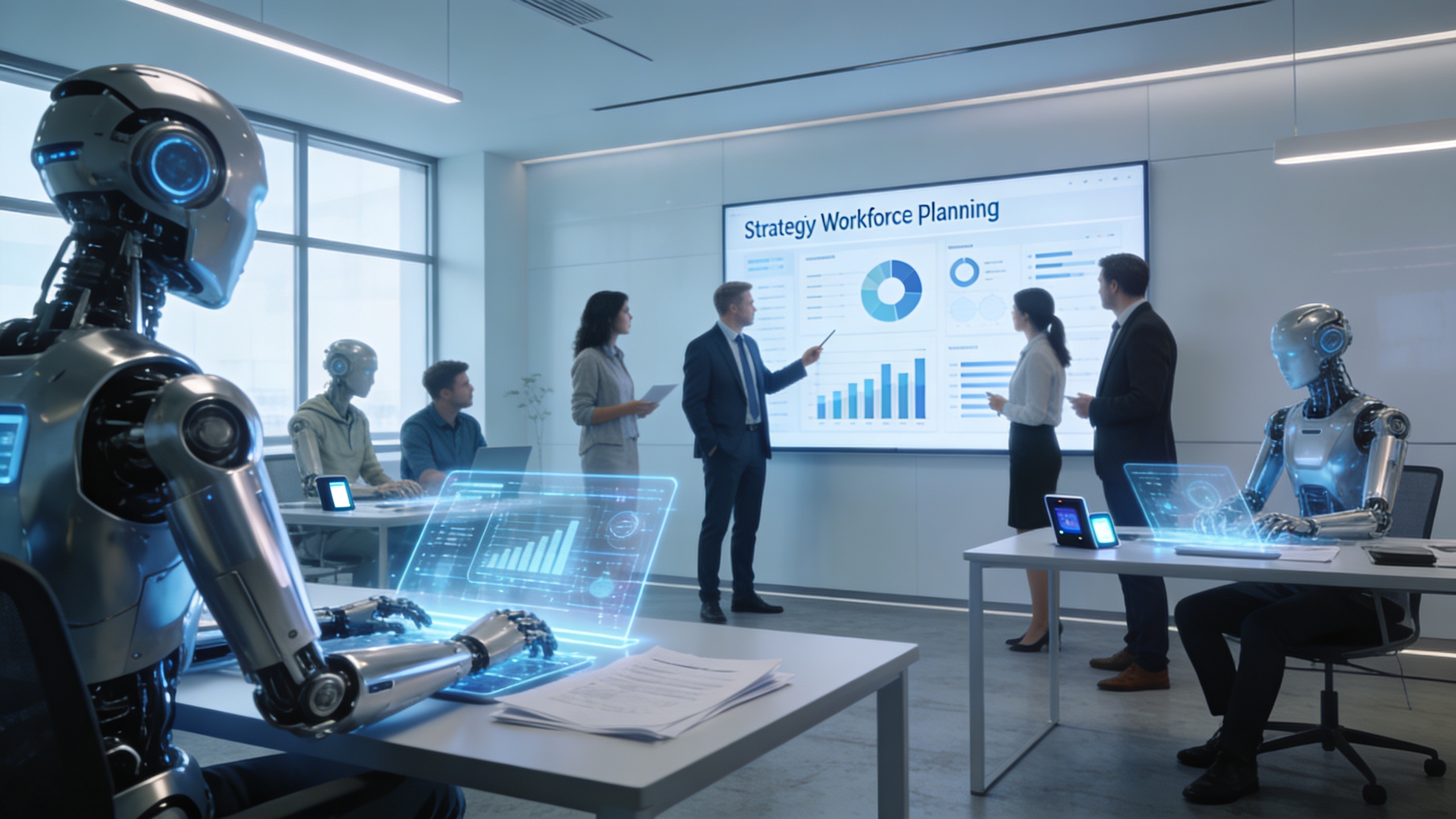
The Paradigm Shift Coming to HR
“Automate routine tasks with AI and increase HRBPs (Human Resource Business Partners).” This proposal, reported by Japanese HR News ONLINE, vividly paints the future of HR departments. For business owners and CTOs, viewing this trend as mere “efficiency improvement” would be premature. This is a golden opportunity to transform the HR function itself from a cost center into a profit center.
Personally, as I promote AI adoption within my own company, I’ve felt the immense impact that automating HR tasks can have on management. For example, by entrusting routine tasks like attendance management, payroll, and internal inquiries to AI agents, you can reduce the workload of responsible staff by over 80%. In fact, at one of my client companies, introducing an AI chatbot cut the time spent responding to employee inquiries from 200 hours per month down to just 30 hours.
What is an HRBP, and Why is Increasing Their Numbers Necessary Now?
An HRBP is a role where HR department members work closely with business units to support the formulation of talent strategies and organizational development. Traditional HR work has centered on “defensive HR” – tasks like recruitment, payroll, and labor management. However, as AI takes over these routine tasks, HR staff can focus on “offensive HR,” meaning strategic work such as talent development, talent management, and cultivating organizational culture.
For business owners, increasing the number of HRBPs isn’t just an added cost. It’s an investment in building a system that can implement talent strategies – which act as drivers of business growth – at the ground level. For example, to prevent top engineers from leaving, you need to design development plans tailored to their individual career aspirations. By having HRBPs collaborate closely with each team, this kind of detailed, personalized support becomes possible.
Specific Examples of HR Tasks That Can Be Automated with AI
So, which specific tasks can be handed over to AI? Here are some representative examples.
Automating Attendance Management and Payroll
By linking cloud-based attendance management systems with AI, you can automatically aggregate clock-in data, predict overtime hours, and check for payroll calculation errors. Tools like “freee Attendance Management” or “Jobcan Attendance Management” can connect with accounting software via APIs, automating payroll almost entirely. Initial implementation costs start at a few thousand yen per month, making it accessible even for small and medium-sized enterprises.
Using Chatbots for Internal Inquiries
FAQs like “How many paid vacation days do I have left?” or “Tell me about the changes to the work regulations” can be answered automatically by an AI chatbot. In my experience, within one month of implementation, chatbots can handle over 70% of inquiries. Implementation costs, including initial setup, range from approximately $700 to $2,100. SaaS-based options like “Helpfeel” or “Commune” are user-friendly choices.
Streamlining Recruitment Tasks
Screening resumes and CVs is an area where AI excels. From creating job postings to scheduling interviews with applicants and even automating initial interviews, AI tools can cover it all. For example, tools like “HireVue” or “HERP” come with AI-powered aptitude assessment features, significantly reducing the burden on recruitment staff.
Cost Estimation for Increasing HRBPs
Many business owners worry, “Doesn’t AI implementation cost a lot?” However, in the long run, the cost of AI implementation can sufficiently offset the expense of hiring additional HRBPs.
Consider a company with 100 employees and three HR staff members. Assuming payroll and attendance management take 100 hours per month, AI implementation could potentially reduce that by 80%. The labor cost for those saved 80 hours, at an hourly rate of $20, amounts to $1,600 per month. That’s an annual cost reduction of $19,200. Meanwhile, the annual cost of AI tools is around $2,000 to $3,500. This means a net saving of over $15,700 per year in resources.
These freed-up resources can easily be allocated to hiring one additional HRBP (assuming an annual salary of $40,000). In other words, the initial investment in AI can be recouped within a year, after which a strategic HR structure becomes sustainable.
Key Points for Successful Implementation
To avoid failure when introducing AI, there are several key points to keep in mind.
Start Small and Validate
Jumping into full-scale AI automation for all tasks at once is risky. Begin with tasks that have a limited impact, such as handling internal inquiries. Run a pilot for one to two months to verify the effectiveness, and only then expand to other areas if things go well.
Centralize Your Data First
To improve AI accuracy, it’s essential to centralize your company’s data. If payroll data, attendance data, and performance evaluation data are stored in separate systems, the AI won’t be able to perform accurate analysis. As seen in the case of pachinko parlors reported by P-WORLD, the combination of “data centralization x AI” is the key.
Get Employee Buy-In
Some employees may fear that AI will “take their jobs.” It’s crucial for business owners themselves to explain that “AI isn’t about taking jobs away; it’s about allowing you to focus on more creative work,” and to show a clear career path toward becoming an HRBP.
Conclusion: AI in HR is Part of Your Business Strategy
Automating routine tasks with AI is not just a cost-cutting measure for the HR department. It’s a business strategy to enhance talent management and accelerate business growth by redirecting freed-up resources to HRBPs.
As KeyMan’s Net reported, the corporate landscape for generative AI is shifting from a “ChatGPT monopoly” to an “era of the Big Three.” By using multiple AIs like Claude and Grok for different purposes, you can achieve even more effective operational efficiency.
Business owners, now is the time to seriously commit to using AI in your HR department and increase the number of talent strategy professionals. As a first step, why not start by identifying your company’s routine tasks and considering which ones should be automated?
Comments